
DeepSeek Harness is an open-source agent harness from DeepSeek. It sits between a model and the tools, workspace, and runtime that let an agent carry out multi-step work. Its core idea is that capabilities are composed from plugins, so developers can inspect and replace parts of the runtime instead of treating the harness as a fixed monolith. The official product page is the best starting point for current availability, supported workflows, and release details: DeepSeek Harness.
The project uses the Cordis plugin framework and applies an “everything is a plugin” design to models, tools, skills, sessions, sandboxes, storage, loops, scheduling, and interface components. This makes DeepSeek Harness a platform for building and experimenting with agent configurations as well as a ready-to-run workspace.
The Standard experience brings together file and web search, planning, editing, shell work, workflows, and other agent capabilities. Code-oriented and Minimal modes support different execution styles, while Creator mode is aimed at inspecting the runtime and composing plugin-based presets. Check the current docs because these modes and APIs continue to change.
Developers can launch the web interface through Node.js with npx @deepseek-ai/dsh web, or clone the public repository and build from source. The local web server is intended for a developer’s machine; teams should read the official setup and security guidance before exposing it to a network or granting it access to valuable data.
A harness is distinct from the language model itself. DeepSeek Harness coordinates context, tools, execution, sessions, and user-facing controls, while a model provider supplies the model responses. The project supports configuration of model adapters and compatible providers; users need to configure the model credentials they intend to use.
The open-source repository and developer-preview status make source inspection and experimentation possible. Compatibility-breaking changes are expected, so pin a version for repeatable work, read release notes before upgrading, and avoid assuming that a preview interface or plugin API will remain stable.
Step 1. A first local trial can be kept small: install a supported Node.js release, launch the web UI, configure a model in the settings, select a disposable workspace, and ask the agent to perform a bounded task such as summarizing a few files. Review each tool action and output.
Step 2. For plugin development, begin by reading the official architecture and plugin documentation. Identify one capability to add or replace, create a minimal plugin, test it in a development profile, and examine how it interacts with dependencies and runtime events before combining it with a larger workflow.
Step 3. For benchmarking, use a controlled workspace and record the exact harness version, model, configuration, permissions, and task. The behavior of an agent is a product of the model and the harness together, so changing either side can alter results.
What does DeepSeek Harness do?
It provides a runtime for connecting a model with tools, skills, files, sessions, sandboxes, and workflows so an agent can operate in a real environment.
Is DeepSeek Harness a language model?
No. It is the orchestration layer around a model. Users configure a model provider separately and use the harness to connect that model to tools and an execution environment.
How do I start the web UI?
The official quick start uses npx @deepseek-ai/dsh web with Node.js installed. Review the current installation documentation and keep the first workspace disposable.
Is it production-ready?
The project is described as a developer preview and expects rapid iteration. Pin versions and assess security, reliability, and operational needs before production use.
Before adopting DeepSeek Harness, define what success looks like in terms that can be checked: a correctly opened or processed input, an output that meets the quality bar, compatibility with the next step, and a recovery path if something goes wrong. Choose representative material, preserve an untouched copy, and change only one or two settings during the first comparison. Record the exact product version and the choices you made. This creates evidence you can revisit rather than relying on a vague first impression.
DeepSeek Harness fits best when it is connected to a clear workflow rather than treated as a novelty. Identify the point where it will be used, the person who checks the result, and the next tool or step that receives the output. Then decide what should be saved: source files, prompts, model or app versions, settings, and review notes. A short repeatable process helps teams compare outcomes and prevents avoidable rework. Start with one task that has a visible success criterion, then expand only if the product performs reliably.
For a second evaluation, repeat the task with a different input that tests one important boundary. Examples include a more complex document, a noisier clip, a less familiar location clue, or a multiplayer session with a small invited group. Compare the outcome, note the failure cases, and decide which limitations matter in your setting. That process makes DeepSeek Harness easier to compare fairly with tools you already use.
The goal is not to use every feature at once. DeepSeek Harness is easier to assess when one defined task is tested carefully, the result is reviewed by a person, and the decision is based on documented capabilities. Visit DeepSeek Harness for the current product information, then make the next step small enough to reverse if the result is not a fit.
Learn more on the official site: DeepSeek Harness.
AI Kenerate puts top models like Veo 3.1, Kling 3.0, FLUX, and Suno v6 behind one prompt box and one credit balance.Try AI Kenerate.

AI-powered face analysis that turns a photo into detailed measurements, style insights, and personalized recommendations.
Upload a photo. Get the maker, age, and value — Antique Scanner reads marks, materials and wear so you know what your antique is worth.
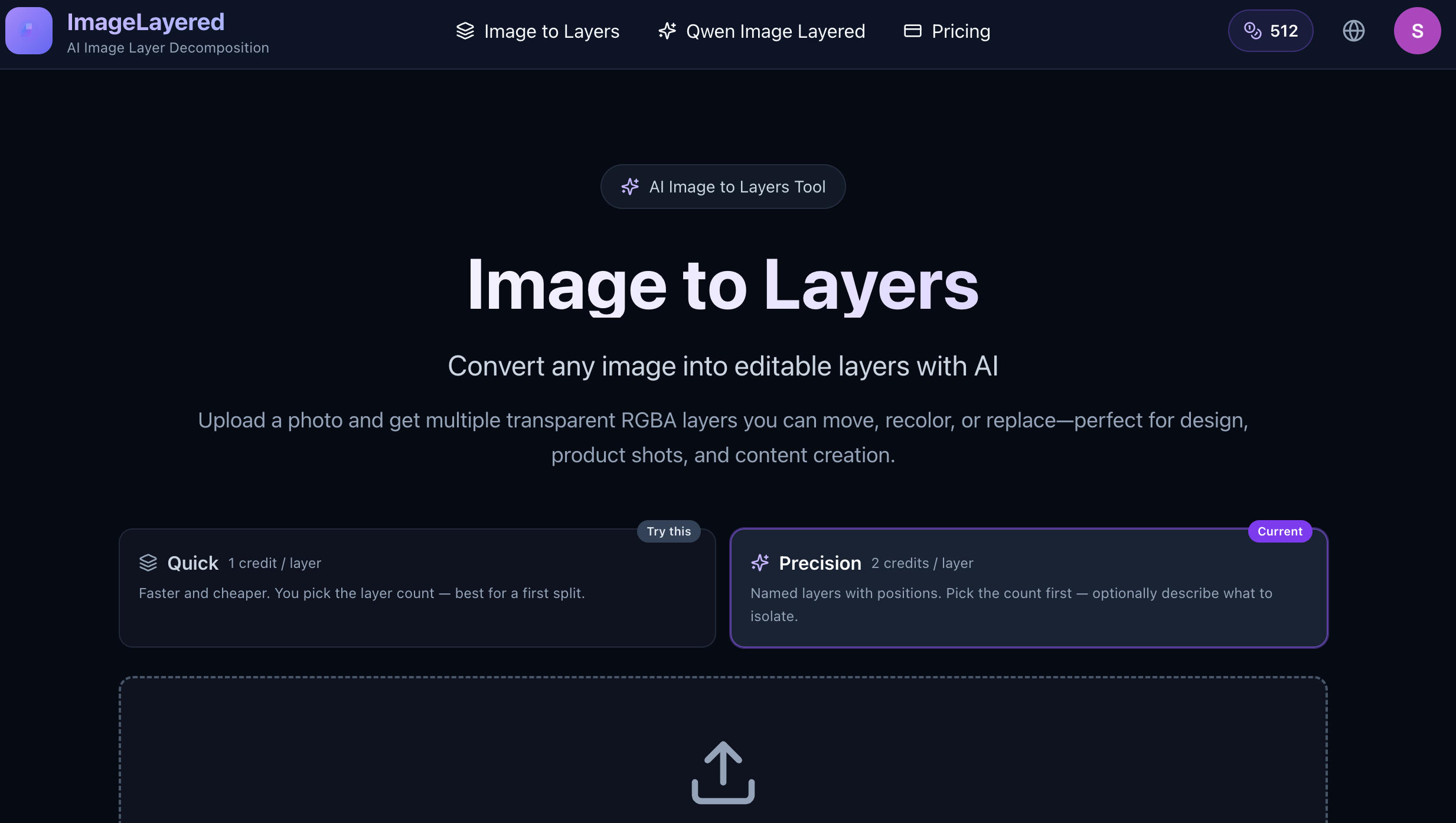
Convert any image into editable layers with AI

Magic Layers – Official Website, What It Is & How to Use

Harness True Model Potential Transform Every Spark of Inspiration into Reality