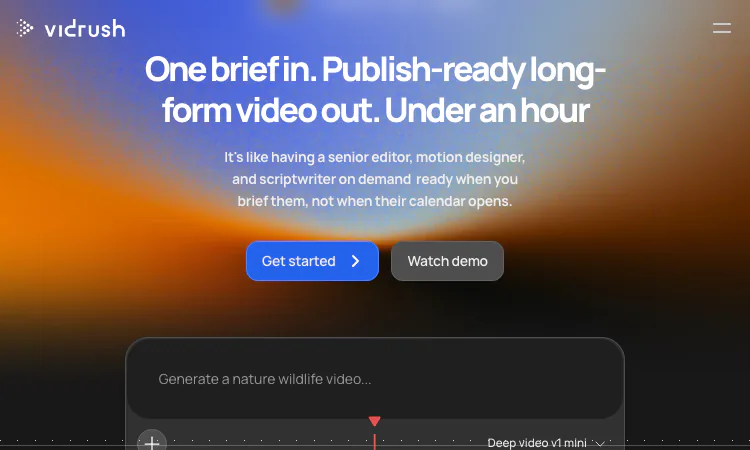
Picture a two-person documentary channel. The host researches and narrates; the editor cuts. Their upload schedule says Tuesday, and last Tuesday the video went up six hours late because a stock footage license needed checking. This is a story about what the same Tuesday looks like when the pipeline behind the channel is VidRush, and it follows the clock rather than the feature list, because the honest way to evaluate VidRush is to watch a day move around it.
The channel in this story runs twelve-minute videos on infrastructure failures, which sits squarely in the documentary and explainer formats VidRush builds for: six to sixty minutes of researched narration, with footage and motion graphics underneath.
The host opens VidRush and writes the brief while the coffee is still hot. Two paragraphs: a collapses-and-what-it-cost angle on a regional power grid failure, the shape of a breakdown video, and a note to end on the repair timeline rather than the blame game. The brief is in English, though VidRush also accepts German and Spanish briefs; the narration output is English either way.
The host also attaches the standard the channel holds itself to: name the sources worth using, name the tone to avoid, and the VidRush brief becomes an editorial brief rather than a prompt. Thirty extra seconds here save a full review cycle later, because the VidRush script comes back shaped instead of generic. It is the same brief the host would send a freelancer, minus the scheduling.
Before submitting, the host glances at the pricing reality. Finished video starts at $2.18 per minute on VidRush, and plans from $99 a month bring the rate below $2 at scale. A twelve-minute VidRush video is a known quantity this morning, not a hope.
The brief goes in at 8:52. In the old pipeline, this was the moment the week stopped belonging to the channel and started belonging to other people's calendars.
VidRush returns a script draft, and the VidRush pipeline stops exactly where the host wants it to. On one screen: the script, the planned footage choices, the voice, the style settings, and a cost estimate. Nothing renders until this page is approved.
The host reads the VidRush script like an editor. The middle section buries the best fact, so it moves up two paragraphs in the VidRush draft before approval. Two claims get flagged for the VidRush researcher role to source properly. This is thirty minutes of real work, and it is the kind of work the host is actually good at.
The footage mode is set to public domain and Creative Commons only, the same defensive default the channel has used since a copyright claim two years ago. VidRush keeps that promise in its sourcing rather than making it a policy document.
Approval happens at 10:04. The style settings carry the channel profile: VidRush has studied the channel pacing, motion, and editing rhythm, so the cut that comes back will sound like this channel, not like a template.
While VidRush renders, the two of them do the work that actually grows the channel: answering comments, drafting the community post, arguing about next week's topic. The five internal roles, researcher, scriptwriter, motion designer, editor, sound designer, are converging on one timeline in parallel.
At 10:58 the VidRush V1 draft is ready, thumbnails included, with an original music bed instead of a shared-library track. In the old Tuesday, a first cut arrived Thursday and the music was a licensing risk.
The host watches the VidRush draft once, end to end, no pausing. Twelve minutes later there is a short list: the section at 6:40 drags, one clip near the end is a visual mismatch, and the closing line lands flat.
Revision runs through chat first. The host tells VidRush to tighten 6:40, replace the mismatched clip, and rework the closing line. Because editing in VidRush is non-destructive, those changes touch clips, not the whole render; the approved first half of the video does not get re-rolled. One stubborn transition gets fixed by hand in the manual VidRush timeline editor, which is the editor half of the two-person channel doing the part it enjoys.
By 12:45 the VidRush video is final. The VidRush thumbnail gets one look at phone size. Upload happens at 13:10, a day scheduled for Tuesday and delivered on Tuesday.
Worth listing is the work that never occurred. No brief was emailed to a scriptwriter and no script was emailed back. No stock site was searched, and no license was checked line by line, because the VidRush sourcing mode had already excluded risky footage. No render queue reset the afternoon, and no revision regenerated twenty minutes of approved material.
Also absent: any illusion about scope. This channel is a documentary channel, and VidRush is explicit that vlogs, gaming, and vertical Shorts or Reels are outside what it does. The VidRush narration is English today. A channel of this shape fits; a different shape would not, and VidRush says so up front.
The measurable difference is that the review work, script gate, draft watch, revision list, fits inside one VidRush morning, while coordination has gone to zero. The felt difference is that the two people spent the day making decisions about their video instead of making decisions about other people's schedules.
A Tuesday like that is repeatable while the VidRush pipeline holds, and the VidRush per-minute cost is visible before every render. There is also a compounding effect the single Tuesday hides. Every video teaches the VidRush channel-matching more about the pacing and motion this audience rewards, so the next draft starts closer to done, and the VidRush cost per publishable minute trends down as the briefs get sharper. For a two-person channel, that quiet improvement is worth more than any single feature on a comparison chart. For channels built on researched narration, VidRush is the difference between a schedule you announce and a schedule you hope for.

Flying Roadster AI Video Generator makes a personal flying car video from your photos, with optional driver portrait and an easy path to share the result.
GCS Cheats provides undetected game hacks, aimbots, ESP, and verified configs across 41 multiplayer titles with instant digital key delivery.
Headphone, DAC, amp and speaker reviews with pros, cons, price history and the one catch to know, from weeks of real listening. No ads, no affiliate links.

Project Moon Life is a free life simulator about personal choices, unexpected turns, and the stories that grow from a resident’s changing circumstances.

AI-powered face analysis that turns a photo into detailed measurements, style insights, and personalized recommendations.
Upload a photo. Get the maker, age, and value — Antique Scanner reads marks, materials and wear so you know what your antique is worth.
