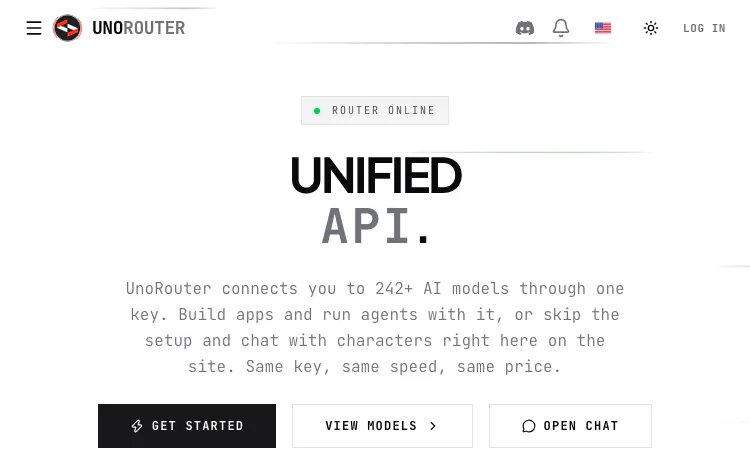
UNORouter helps developers, agent builders, CLI users, and people comparing hosted AI models one compatible access path for trying models from multiple upstream providers. This everyday workflow view explains the role of UNORouter, the first useful step, and the decision points that matter in a real session. Readers can try UNORouter on a small example, see whether its core action fits their need, and then decide whether it belongs in a larger workflow. The product is most useful when UNORouter is judged against a clear task rather than an assumption that one tool should replace every other option.
UNORouter is easiest to evaluate when the feature is connected to a practical outcome. From a everyday workflow perspective, a visitor should understand how UNORouter moves from an input to a result that can be inspected. Everyday tools are easiest to understand when they fit a familiar habit and solve a common problem. For UNORouter, this means noticing the main action, confirming the expected output, and identifying where a person still needs to make a judgement. A short trial with UNORouter answers more than a broad feature list: it shows whether the workflow fits the task, which settings influence the result, and what should be reviewed before use.
The listing includes models marked free and paid, pay-per-use options. Free routes lower the barrier to experimentation, while a paid choice may be appropriate when a task needs a stronger capability or a different response style. Pricing and usage belong to the current product and account pages, so users should check them directly. A shared router makes exploration easier, but it does not mean that every model uses the same price or behavior. For UNORouter, the practical benefit is easier to judge when the input and intended result are specific. A person using UNORouter can make one change, review the outcome, and decide what still needs attention. The UNORouter workflow becomes clearer after a small first attempt, and UNORouter is simpler to compare when the original example remains available.
A practical first connection is to create an account, retrieve a key from the official interface, choose a listed model, and configure one compatible client. Then send a low-risk prompt and inspect the output, latency, and usage. Testing one client at a time makes troubleshooting clearer. Once a route works, record its model identifier and relevant settings so another developer can reproduce the setup without rediscovering the same configuration. For UNORouter, the practical benefit is easier to judge when the input and intended result are specific. A person using UNORouter can make one change, review the outcome, and decide what still needs attention. The UNORouter workflow becomes clearer after a small first attempt, and UNORouter is simpler to compare when the original example remains available.
A router reduces repeated access setup, but developers still need to evaluate model behavior, data handling, rate limits, and provider availability. Different models can vary in safety behavior, context, and tool use. The catalogue can change, and a provider can have its own terms. Sensitive workloads deserve a review of data policies and representative testing before requests are sent. This keeps the convenience of a shared interface grounded in ordinary engineering judgement. For UNORouter, the practical benefit is easier to judge when the input and intended result are specific. A person using UNORouter can make one change, review the outcome, and decide what still needs attention. The UNORouter workflow becomes clearer after a small first attempt, and UNORouter is simpler to compare when the original example remains available.
A unified access layer is useful for projects that compare models, use multiple AI clients, or need a consistent agent configuration. Teams can reduce repeated setup, while an individual developer can begin with a free route and compare alternatives later. The strongest use is to treat the router as an integration layer and measure the models behind it on real tasks. A small, documented trial makes the next model or client decision easier. For UNORouter, the practical benefit is easier to judge when the input and intended result are specific. A person using UNORouter can make one change, review the outcome, and decide what still needs attention. The UNORouter workflow becomes clearer after a small first attempt, and UNORouter is simpler to compare when the original example remains available.
The service presents a unified API for models from multiple upstream providers. Its homepage currently reports 244 routable models and more than 43 providers, along with free and pay-per-use groups. Those are live catalogue counts rather than permanent guarantees. The central idea is a shared access layer that avoids repeating provider setup for every model a developer wants to try. A single key can route compatible client requests through the selected model. For UNORouter, the practical benefit is easier to judge when the input and intended result are specific. A person using UNORouter can make one change, review the outcome, and decide what still needs attention. The UNORouter workflow becomes clearer after a small first attempt, and UNORouter is simpler to compare when the original example remains available.
The API is described as OpenAI-compatible, which can fit applications that accept a custom base URL and key. A user configures a client, selects a model identifier, and sends a request through the router. Compatibility can reduce setup work, but it does not make every provider’s model behave the same way. Before production use, check the endpoint, model name, context window, tool support, and any limits that apply to the chosen route. For UNORouter, the practical benefit is easier to judge when the input and intended result are specific. A person using UNORouter can make one change, review the outcome, and decide what still needs attention. The UNORouter workflow becomes clearer after a small first attempt, and UNORouter is simpler to compare when the original example remains available.
Listed coding clients include OpenCode, Cline, Roo Code, Kilo Code, and Zed. Developers can point supported tools at a custom endpoint and explore more than one coding model through a shared configuration. This is useful when a team wants to compare latency, response quality, or cost on the same task. A small evaluation prompt or controlled repository change provides better evidence than choosing a model based on its name alone. For UNORouter, the practical benefit is easier to judge when the input and intended result are specific. A person using UNORouter can make one change, review the outcome, and decide what still needs attention. The UNORouter workflow becomes clearer after a small first attempt, and UNORouter is simpler to compare when the original example remains available.
The supported paths include character and fiction clients such as SillyTavern, Janitor.AI, Chub, and RisuAI, as well as generic chat interfaces. That makes the product relevant beyond software teams. Users can connect a model to a familiar front end, and the website also offers character chat directly. Each third-party client has its own connector settings and may change over time, so the product’s current guide should be checked during setup. For UNORouter, the practical benefit is easier to judge when the input and intended result are specific. A person using UNORouter can make one change, review the outcome, and decide what still needs attention. The UNORouter workflow becomes clearer after a small first attempt, and UNORouter is simpler to compare when the original example remains available.
Start with one small example that represents the real need, then review the output, settings, and current terms. Review the result before sharing, publishing, or reusing it. That keeps the first decision manageable and makes the strengths of UNORouter easier to see. The product may fit when its main workflow is already close to the work a person needs to finish. Before depending on UNORouter, verify model identifiers, feature support, pricing, limits, and provider policies before production use. A careful first session with UNORouter creates a useful basis for deciding whether to return for a larger task.
Flying Roadster AI Video Generator makes a personal flying car video from your photos, with optional driver portrait and an easy path to share the result.
GCS Cheats provides undetected game hacks, aimbots, ESP, and verified configs across 41 multiplayer titles with instant digital key delivery.
Headphone, DAC, amp and speaker reviews with pros, cons, price history and the one catch to know, from weeks of real listening. No ads, no affiliate links.

Project Moon Life is a free life simulator about personal choices, unexpected turns, and the stories that grow from a resident’s changing circumstances.

AI-powered face analysis that turns a photo into detailed measurements, style insights, and personalized recommendations.
Upload a photo. Get the maker, age, and value — Antique Scanner reads marks, materials and wear so you know what your antique is worth.